Korean Archery Team Trials, 64 Archers for 24 Places
Korea's archery team shoots at the Aichi-Nagoya Asian Games from 26 September to 3 October, at Okazaki Central Park Multipurpose Square. Neither of the women who swept three golds at the last two Olympics is in it. Im Si-hyeon, the Paris triple champion, came tenth at the third selection trial in March, per MBC's report from Cheongju. An San, the Tokyo triple champion, was fifth at the final evaluation on 17 April.
The claim attached to these trials is that they are harder than the Olympics. The Korea Archery Association publishes its regulations and its scoresheets as PDFs, on a site that renders nothing without JavaScript and is easy to give up on. I read the ones for the cycle that is running right now.
What the 2027 regulations set out
The association's second-trial regulations for recurve, posted as 1.1ver, run to fourteen pages of target-rotation charts and points tables. The competition is held from 30 October to 4 November at the Jinho International Archery Range in Yecheon, six days and a round a day. Entry is 64 men and 64 women, described in the document as 아시안게임대표 + 1차 선발전 상위자, the Asian Games representatives plus the leading finishers from the first trial. Twenty-four of each are selected, and the top eight of those go into winter camp at the Jincheon athletes' village.
One line in that section is easy to read past. The term of the appointment, 선수임기, runs from the day the Korean Sport & Olympic Committee approves it to the last day of the 2027 third trials.

Round one was 288 arrows over two days
The first trial of this cycle was held on 4 and 5 September at the same Yecheon range. Xportsnews put the entry at 288 archers across four categories, 96 recurve men, 96 recurve women, 48 compound men and 48 compound women, with 61 recurve and 29 compound archers per gender going through to the second trial. The association's own day-one scoresheet for recurve women lists 90 names and the men's sheet 92. The gap between the announced entry and the sheet is not explained on either page.
Every sheet carries the format in its header, 70m, 36 arrows a round, eight rounds, ranked on the total. Day one covers four of them, so each archer shot 144 arrows on the Friday and 144 more on the Saturday. Ranking points run from 64 for first place down to 1 for 64th and zero after that. Im Si-hyeon led the women's sheet on day one with 1352.
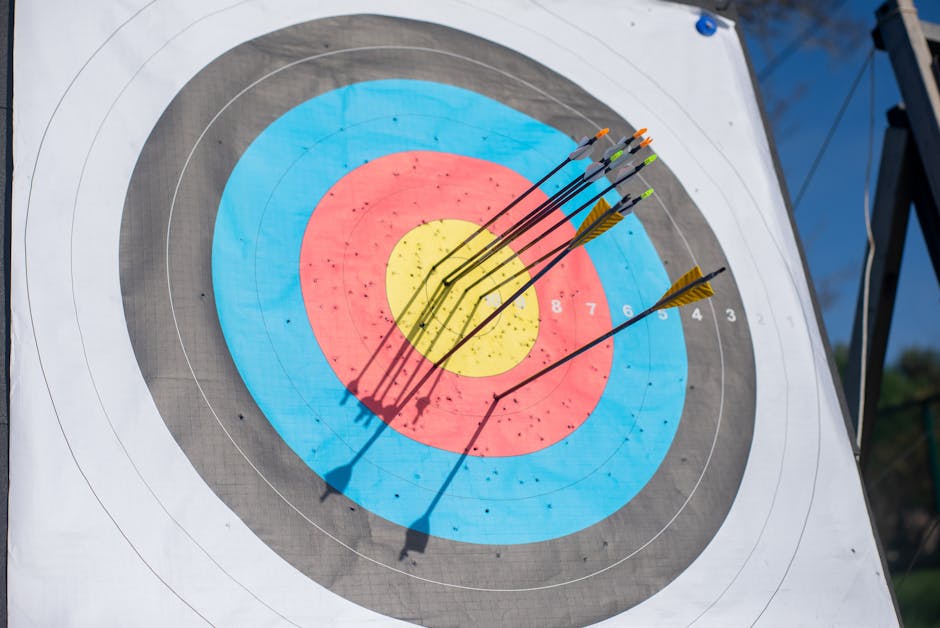
Read down the affiliation column and the field is the whole sport at once. Hongseong Girls' High School in third, Incheon National University in sixth, the Seoul city association in fifth, corporate squads from Hyundai Mobis and Hyundai Department Store and the Jeonbuk provincial office, and a boy from Dongjin Middle School sitting 87th on the men's sheet.
The scores do not start from zero
The version of this that travels in English has everyone wiped back to nothing each year. The regulations describe something more specific. First-round points, worth up to 32, carry forward and add to round two (64) and round three (64) for a 160-point total, and the top 32 on that total go on. Those 32 are re-seeded on a fresh 32-point reverse scale. Rounds four, five and six then add 24, 32 and 32 points on top for a second total of 120, and 24 names come out of the bottom of it.
Two reports cut against the clean-slate version from the other side as well. The same Xportsnews report states that the three Asian Games representatives in each category skip the first trial altogether and enter at the second. And Kookmin Ilbo's write-up of the 2025 cycle attaches the reset to compound only, where the first two trials were scored separately from the third.
Is that harder than an Olympic Games?
Nothing I opened ranks the two against each other. The phrase belongs to Korean sports headlines more than to the association. Xportsnews ran 올림픽 금메달보다 더 어렵다는 지옥의 레이스 over its preview of the March trial, a hell race said to be harder than an Olympic gold, and the body of that article attributes the claim to nobody.
The arithmetic below is mine, assembled from two sources rather than lifted from one. An Olympic archery event takes 64 women, and the Paris 2024 qualification rules allowed each national committee "a maximum of six archers, three per gender". The most Korean opposition an archer meets at a Games is therefore two. At Yecheon on 4 September she was one of 90.
That is a headcount rather than a measure of difficulty. The regulations do not weigh a shoot-off in an Olympic final against a November afternoon in Yecheon, and the two scoring systems are not the same shape. Korea's Olympic archery record stands at 32 golds, 10 silvers and 8 bronzes, and the women's team has won every Olympic title since the event was added in 1988, ten in a row, the most recent on 28 July 2024 against China in a shoot-off. Whether the domestic field explains that run is an argument people have. The regulations do not address it.
Records set at the trials do not count
The association's competition regulations, posted as the 전문 or full text and dated 23 January 2024 in the association's own filename, carry a clause that turns up in none of the English write-ups I found. Article 5.3.3.2 reads 국가대표 선발전 등과 같은 참가자격 제한 대회의 신기록은 인정되지 않는다, new records at restricted-entry competitions such as the national team trials are not recognised. Article 5.4.3.2 repeats the wording for world records.
The totals on those scoresheets are therefore not Korean records and cannot become them, whatever the numbers come to. Article 5.4.3.3 lists the six domestic competitions the association registers with World Archery for record purposes, and the trials are not among them.
Who is going to Okazaki
The recurve three are Oh Ye-jin, Kang Chae-young and Lee Yun-ji for the women, Kim Je-deok, Kim Woo-jin and Lee Woo-seok for the men, confirmed on 17 April at Yecheon after two rounds of final evaluation, the first of them in March. Compound sends Park Ye-rin, Park Jung-yun and Kang Yeon-seo, alongside Kim Jong-ho, Choi Yong-hee and Choi Eun-kyu. Kang was born in 2011 and is still at middle school, the youngest final entry Korean archery has had; Money Today lists her at 15 in the squad for a 5 September training session at Gwangju-Kia Champions Field, where the team shot inside a baseball stadium.
Japan and Korea share UTC+9, so if you are converting from the US or the UK you need one offset for the whole Games rather than two. The Games open on 19 September and close on 4 October. I could not open a published day-by-day archery schedule; the official site and the previews I tried returned errors or gave only the block of dates. A 10am start in Okazaki would be 9pm the previous evening on the US East Coast and 2am in the UK.
The second trial of the next cycle opens at Yecheon on 30 October, 26 days after the closing ceremony in Nagoya. The six archers shooting recurve in Okazaki are on the entry list for it.
This is a running news series, not a one-off post — new stories go up twice a day, roughly 7am and 7pm Korea time.
More Korea coverage from our network: Hallyu Now · Korea Travel Planner · Korean Table · Seoul Skin Notes


Comments
Post a Comment